
People have an extraordinary amount of confidence in their ability to get away with things.
They hurt people, move on with their lives, and because nothing happens immediately, they assume the matter is settled.
I find that confidence rather amusing.
There’s a story I once heard that reminds me why.
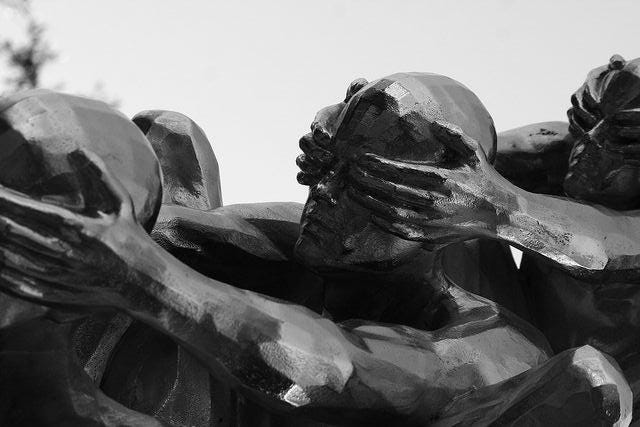
Beneath the Oak Tree
There once lived a man whose elderly father had fallen terribly ill.
The old man could no longer walk, bathe, or feed himself. He depended entirely on his son, who took on the responsibility of caring for him.
At first, he did so lovingly.
He prepared his meals, washed him, changed his clothes, and attended to his every need.
But as the months passed, his patience began to wear thin.
What had started as love became duty. Duty became obligation. And eventually, obligation became resentment.
He grew tired of the sleepless nights, the constant demands, and the life he felt was slipping away while he cared for his father.
One day, he decided he’d had enough.
He carried his father deep into the forest, taking a sharpened cutlass with him.
Beneath a large oak tree, he lowered the helpless old man into a shallow hollow in the ground.
He raised his cutlass, intending to end his father’s life.
But he couldn’t bring himself to do it.
Instead, he abandoned him there, wrapped in a blue patterned cloth, unable to move or find his way home.
And he walked away.
Years passed.
The son grew older, raised a family, and eventually became an elderly man himself.
Then, as though life were repeating an old script, he fell ill.
His body weakened until he too became bedridden. He retained some awareness and could occasionally manage a few words, but he rarely spoke.
His own son, now a strong and energetic young man, became responsible for caring for him.
At first, he did what was expected.
He fed him, bathed him, and attended to his needs.
But eventually, the same exhaustion crept in.
The same frustration.
The same resentment.
Until one day, he too decided he’d had enough.
He took a sharpened cutlass, carried his father into the forest, and lowered him onto the ground.
But unlike his father before him, he intended to finish the job.
As he prepared to strike, the old man struggled to speak.
“Son, wait.”
The young man stopped.
“Before you kill me, there’s something I want to show you.”
He pointed towards a large oak tree a short distance away.
“Please, carry me over there.”
The young man hesitated, perhaps thinking his father was simply trying to delay his death.
But he obliged.
When they reached the tree, the old man asked to be lowered to the ground.
“Look beneath the roots,” he whispered.
His son looked.
“There’s nothing there.”
“Look closer.”
The young man moved towards a shallow hollow and pushed aside some leaves.
“I can see a piece of cloth.”
“Is it blue?”
“Yes.”
“Does it have a pattern running across it?”
The old man described the pattern.
His son examined the cloth again.
“Yes. How did you know?”
The old man closed his eyes.
“Because that’s where I left my father.”
His son turned towards him.
“What?”
“Many years ago, my father became ill, just as I am now. I cared for him until I grew tired. One day, I brought him into this forest with a cutlass, intending to kill him.”
He looked towards the hollow.
“But I couldn’t do it. I left him here instead.”
He pointed towards the cloth.
“If you dig beneath it, you’ll find his bones.”
The young man stood speechless.
“Now look at me,” his father continued. “I brought my father here because I grew tired of caring for him. And you’ve brought me here for exactly the same reason.”
He paused.
“But there’s a difference. I couldn’t bring myself to kill my father. You intend to kill yours.”
The young man lowered his eyes.
“Do you understand what that means? What I did has returned to me, but worse.”
The old man’s voice trembled.
“If you kill me today, what will your own son do to you when you become old? Will he bring you here too? Will his son do the same to him?”
He looked towards the oak tree.
“Will this become our family’s graveyard, where every generation brings its father to die?”
For a moment, neither spoke.
Then the old man continued.
“I know what I did. Perhaps you’re simply the one through whom my punishment has finally arrived. I cannot pretend I don’t deserve to answer for my actions.”
He struggled to gather his breath.
“But son, please, don’t become the vessel through which this continues. If you do, you may one day find yourself where I am now.”
The young man looked at the cutlass.
Then at the hollow beneath the tree.
And finally, at his father.
He lowered the weapon.
Without another word, he lifted the old man and carried him home.
Two days later, his father died naturally.
And with that decision, the cycle ended.
I think about that story sometimes.
Not because I believe every misfortune is punishment for some forgotten wrongdoing. Innocent people suffer too, and not every tragedy has a moral explanation.
But I believe in balance.
Push and pull. Action and reaction. The energy we put into the world finding its way back to us, sometimes through people who have no idea what came before them.
The man had forgotten, or perhaps simply buried, what he did beneath that tree.
His son knew nothing about it.
Yet there they were.
The debt had found its way home without anyone knowing it was owed.
And that’s the thing about karma. Some people get the satisfaction of watching those who wronged them face the consequences of their actions. Others never do. Some leave this world without an apology, an explanation, or any visible justice.
But not witnessing someone’s reckoning doesn’t make the wrong they committed any less wrong.
And our healing shouldn’t depend on watching someone else pay for what they did. Sometimes, we have to learn to walk away, let go, and find peace without an apology, an explanation, or even the satisfaction of knowing they regret it.
It’s not always fair. But neither is allowing someone who hurt you to keep occupying your thoughts long after they’ve left your life.
And if you’ve deliberately hurt someone, I wouldn’t mistake their silence for your innocence.
You may forget what you did. You may convince yourself it wasn’t that serious. You may live comfortably for years.
That doesn’t necessarily mean the matter is settled.
Now, personally, I respect karma, but I do have a few concerns about its delivery time.
I’m not particularly fond of waiting for the universe to address disrespect that I can confront myself. Boundaries exist for a reason, and I’m quite happy to enforce mine.
Still, the story reminds me of something important.
You can recognise that someone deserves accountability without becoming cruel yourself.
The young man spared his father, but that didn’t undo the grandfather’s abandonment. Nor did the old man’s peaceful death automatically absolve him of what he’d done.
To those who’ve been wronged, don’t spend your entire life waiting for a front-row seat to someone else’s downfall. Your peace deserves better than that.
And to those who knowingly hurt others, be careful what you put into the world.
You never know how it might find its way back.
Somewhere, your oak tree may already be waiting for you.
Yes yes very well said👏👏👏
Though letting go is most of the time easier said than done, unfortunately